The Beginner's Guide to Aquascaping: 15 Stunning Ideas to Get You Started
The Beginner's Guide to Aquascaping: 15 Stunning Ideas to Get You Started
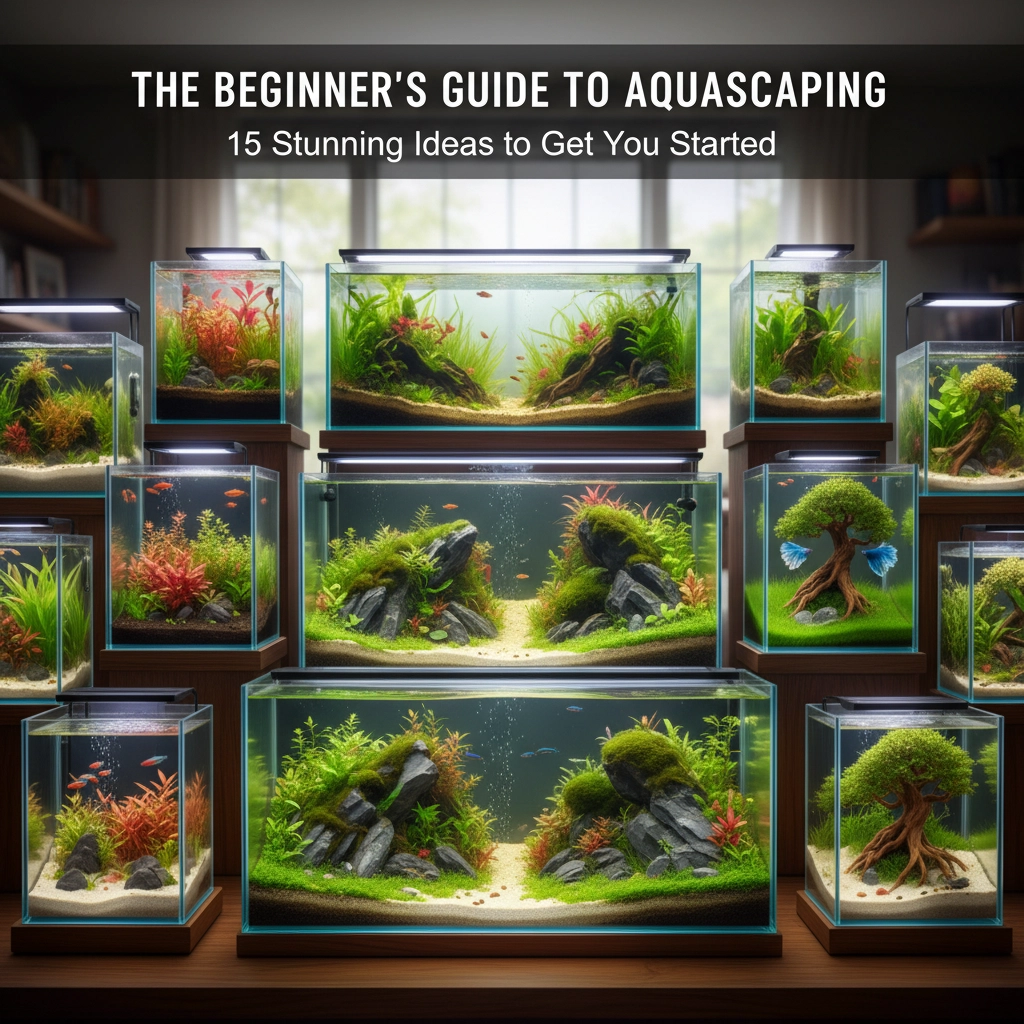
Whether you're a seasoned aquarium veteran or a newcomer ready to dive into the mesmerizing world of aquascaping, you're about to embark on an incredible journey that transforms ordinary fish tanks into breathtaking underwater masterpieces. Aquascaping combines the technical precision of aquarium management with the artistic vision of landscape design, creating living art that captivates and inspires.
Ready to dip your toes into this rewarding hobby? Let's explore 15 stunning ideas that will help you create your first aquatic oasis with confidence and style.
1. Master the Golden Triangle Foundation
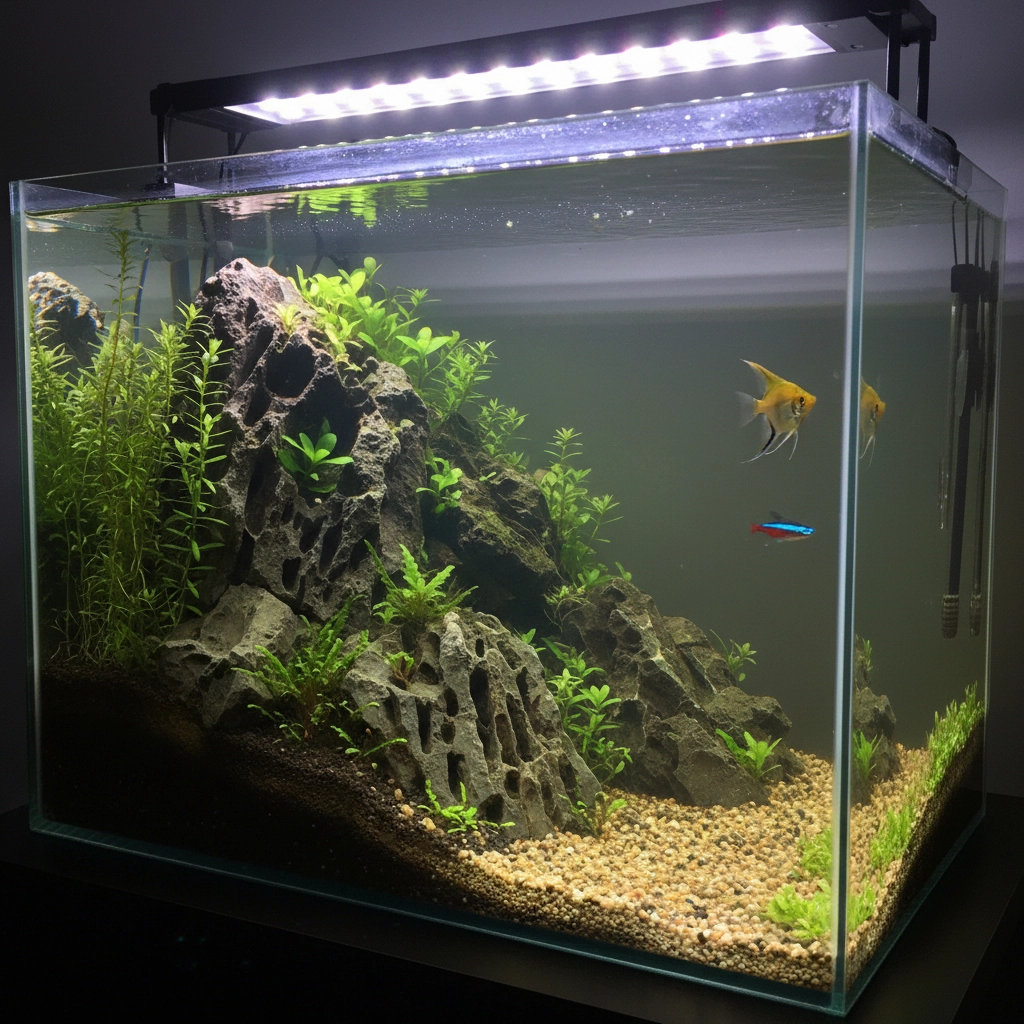
Your aquascaping adventure begins with understanding the most fundamental design principle: the golden triangle. This technique involves creating a right-angled triangle composition rather than an equilateral one. Build your highest point on one side of the tank with a dramatic slope descending toward the opposite side, establishing striking visual contrast between built-up hardscape and open swimming space. This approach works particularly well for Nature Aquarium-style designs and creates an instant focal point that draws the eye naturally through your underwater landscape.
2. Embrace the Rule of Thirds Layout
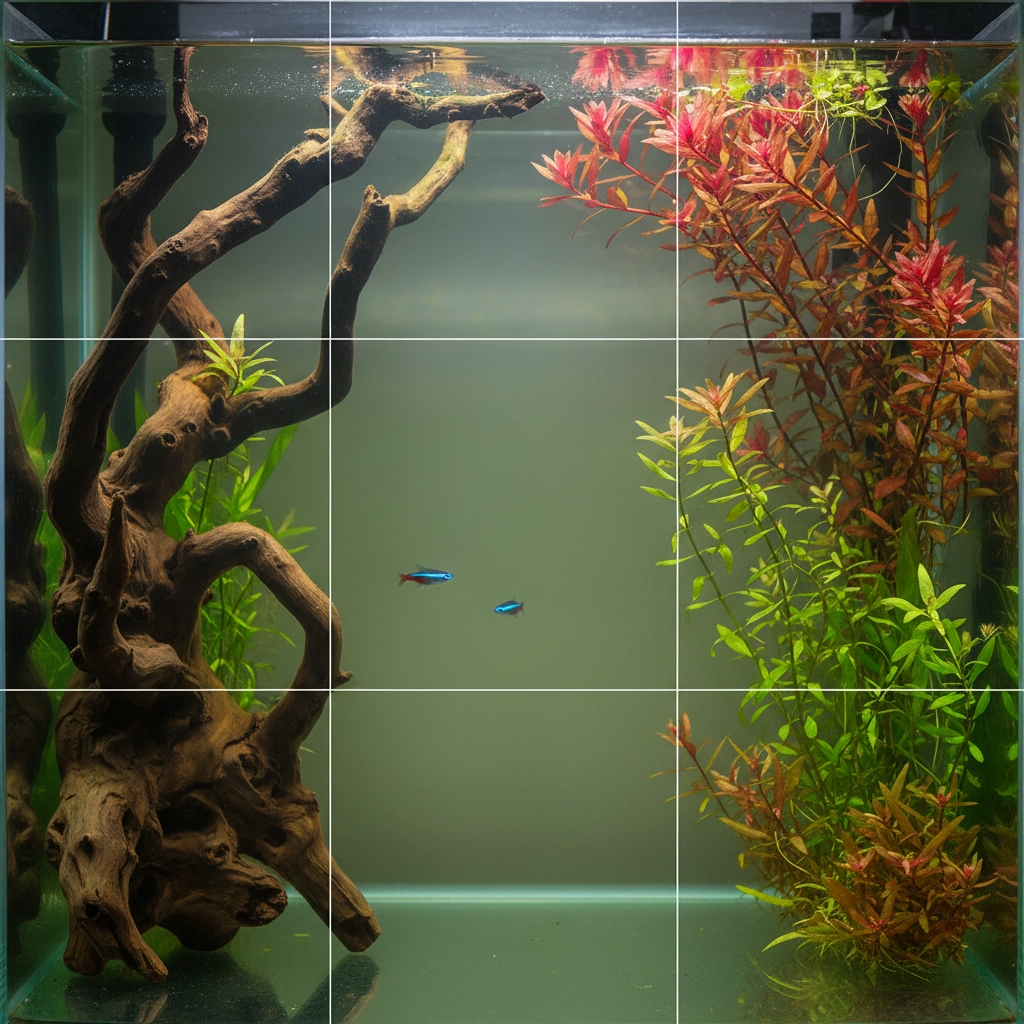
Transform your tank into a professional-looking display by applying the rule of thirds principle. Imagine dividing your aquarium into nine equal sections with two horizontal and two vertical lines. Place your most captivating elements: whether it's a stunning piece of driftwood, a rock formation, or a vibrant plant cluster: at the intersection points of these lines. This time-tested composition technique creates balanced, visually appealing arrangements that feel natural and harmonious.
3. Create Depth with Foreground, Midground, and Background Layers
Think of your aquarium as a three-dimensional theater stage rather than a flat canvas. Arrange your elements using the "school photo" approach: tallest plants and hardscape at the back, medium-height features in the middle, and shortest elements in the foreground. This layering technique creates incredible depth and draws viewers into your underwater world, making even smaller tanks feel expansive and immersive.
4. Start Simple with Essential Equipment Setup
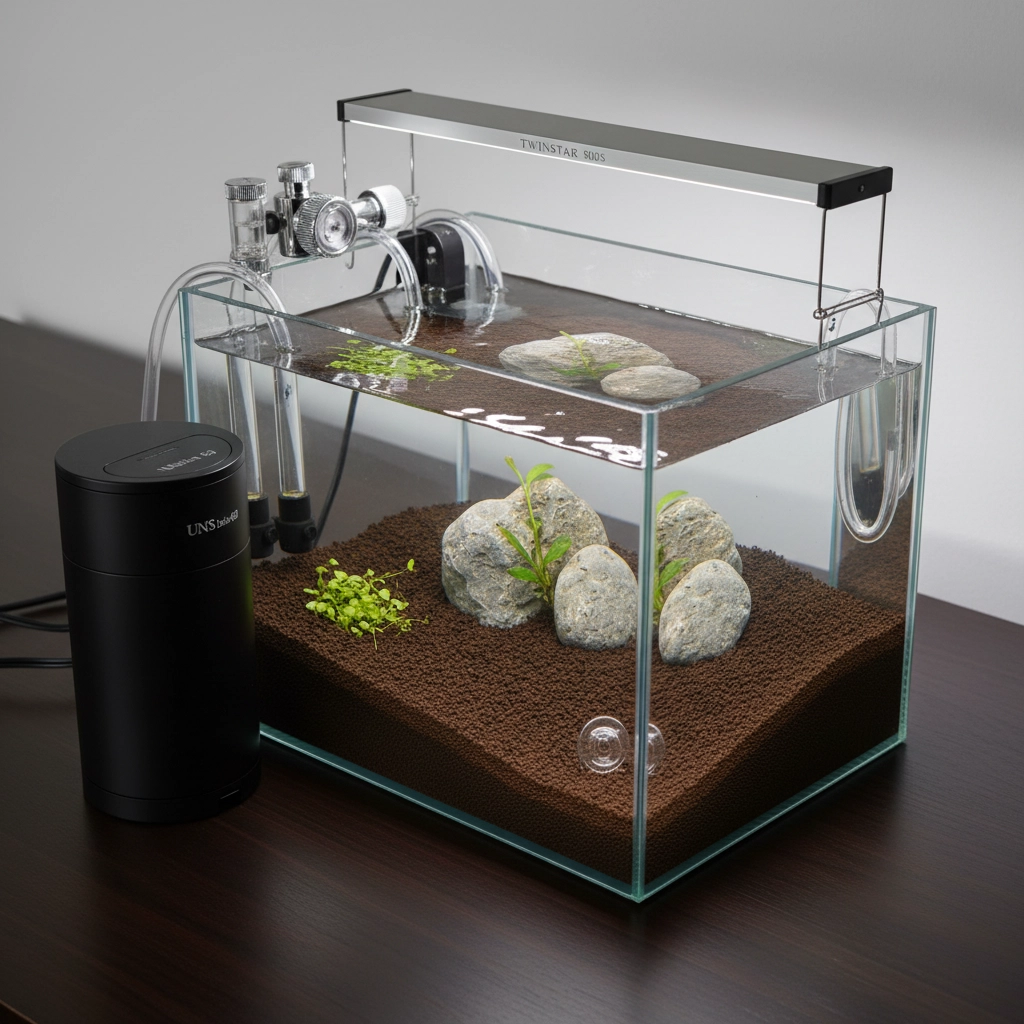
Before diving into complex designs, ensure you have the right foundation. Your basic toolkit should include a quality tank (any size works for beginners), reliable filtration system (external, internal, or hang-on-back options), LED lighting with timer capability set for approximately 8 hours daily, and nutrient-rich substrate to support healthy plant growth. For planted tanks with demanding species, consider adding a CO2 system to boost plant vitality and color.
5. Try the Stunning Iwagumi Rock Garden Style
Embrace the minimalist beauty of Iwagumi aquascaping, a Japanese-inspired approach that focuses primarily on carefully positioned rocks and simple plant carpets. This style typically features an odd number of stones (usually three or five) of varying sizes, with the largest serving as your main focal point. The clean, zen-like aesthetic is perfect for beginners because it requires fewer plant species and emphasizes the natural beauty of hardscape materials.
6. Design a Vibrant Dutch Aquarium Paradise
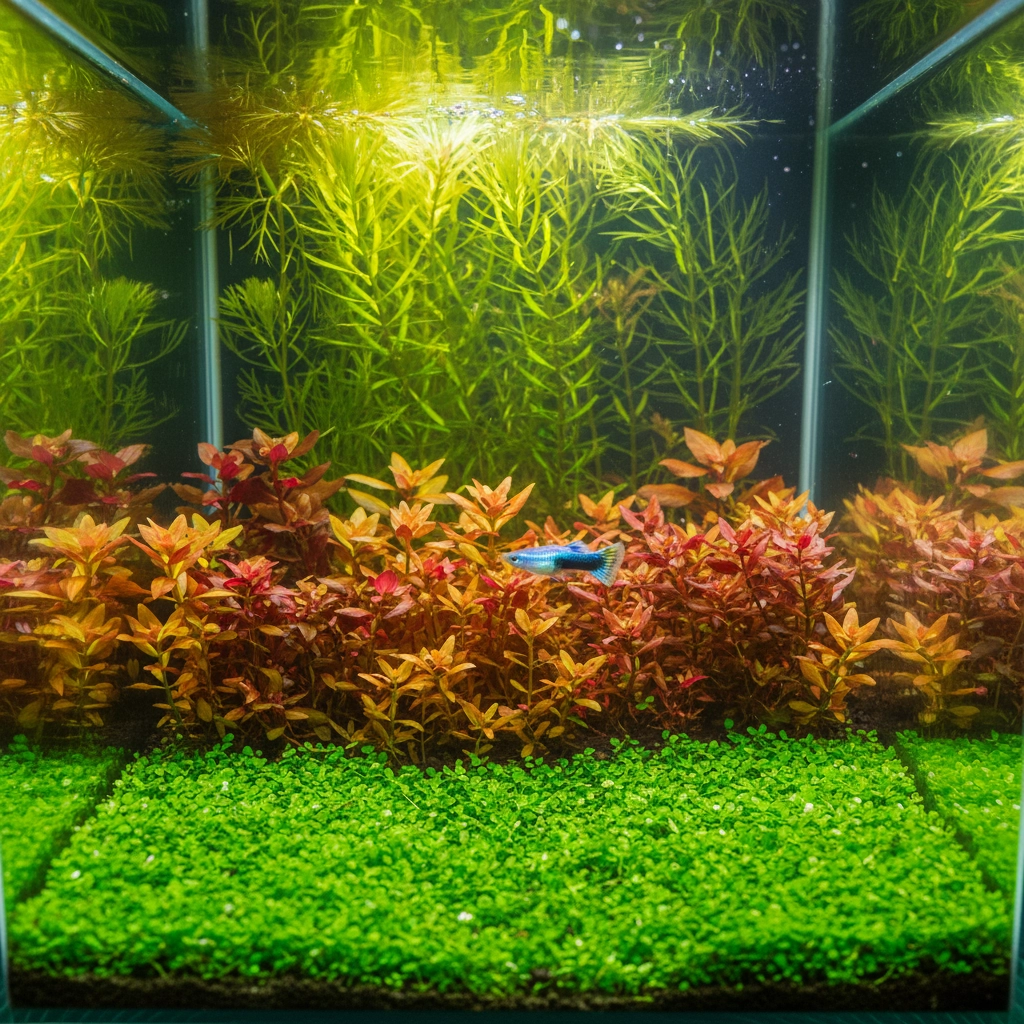
For those drawn to lush, colorful displays, the Dutch aquascaping style offers an explosion of plant varieties arranged in terraced groups. This approach emphasizes different textures, colors, and growth patterns to create a garden-like underwater landscape. Focus on creating "plant streets": clear pathways between different plant groups: and use contrasting leaf shapes and colors to build visual interest throughout your tank.
7. Build Captivating Island Formations
Create dramatic focal points using island-style layouts that feature rocks and driftwood forming isolated formations within your tank. These eye-catching structures can serve as centerpieces around which you arrange complementary plants and create natural swimming channels for your fish. The key is varying the heights and sizes of your islands to maintain visual balance while providing interesting exploration areas for tank inhabitants.
8. Experiment with Floating Plant Magic
Don't overlook the enchanting effects of floating plants, which add incredible texture and create mesmerizing dappled shadows throughout your aquascape. Species like Amazon frogbit, water lettuce, or red root floaters not only provide natural filtration but also create dynamic lighting effects that change throughout the day. These living umbrellas add depth and movement to your underwater world.
9. Master the Art of Sloping Substrates
Elevate your aquascaping game by creating varied substrate depths that add dimensional interest to your tank floor. Build gentle slopes that guide the viewer's eye from shallow foreground areas to deeper background sections. This technique enhances the illusion of depth and creates natural-looking terrain that mimics riverbeds, lake shores, or forest floors.
10. Create Stunning Concave Valley Designs
Design breathtaking concave layouts that feature interesting pathways and asymmetrical flow patterns. This approach involves building up substrate and hardscape on both sides of your tank while leaving a valley or pathway through the center. The result is a dynamic composition that guides viewers through your underwater landscape while providing multiple viewing angles and focal points.
11. Utilize Strategic Lighting for Drama
Transform your aquascape with thoughtful lighting placement that highlights textures, creates shadows, and enhances the three-dimensional quality of your design. Experiment with different lighting angles and intensities to bring out the best in your plants and hardscape. Remember that consistent lighting schedules are crucial: too much light damages plants while insufficient illumination causes them to lose color and vitality.
12. Apply the Size Gradient Technique
Create compelling depth illusions by using multiple versions of similar elements in progressively smaller sizes. Place your largest rocks, driftwood pieces, or plant clusters in the foreground, with smaller versions positioned toward the back of the tank. This technique tricks the eye into perceiving greater depth and distance, making your aquarium appear larger and more expansive than its actual dimensions.
13. Design Natural Swimming Corridors
Think like a fish when planning your layout! Create clear swimming paths and hiding spaces that allow your aquatic friends to move naturally through their environment. These corridors not only benefit fish behavior but also add dynamic flow lines to your design that draw the viewer's eye through different areas of your aquascape.
14. Start Your First Build with the Two-Phase Method
Simplify your initial aquascaping experience by splitting the setup into manageable phases. First, focus on establishing your substrate foundation and positioning hardscape elements like rocks and driftwood. Take time to perfect these elements before moving to phase two: planting and equipment installation. This approach reduces overwhelm and allows you to make adjustments without disturbing established elements.
15. Maintain Consistency During Your First Month
Once your aquatic masterpiece comes together, success depends on consistent care during those crucial first weeks. Set your lighting and CO2 systems on reliable timers to provide identical conditions daily. Monitor your tank's cycling process carefully before introducing fish, and resist the temptation to make frequent changes during this establishment period. Your patience will be rewarded with a thriving, stable ecosystem.
Your Aquascaping Journey Starts Now
Remember that every master aquascaper started exactly where you are today: with enthusiasm, basic equipment, and a vision for creating something beautiful. The most important advice for beginners is to start simple and gradually build your skills. Visit local aquascaping shops for live inspiration, sketch your designs before committing to materials, and don't be afraid to experiment with different styles until you discover your personal aesthetic.
Your underwater world awaits, and with these 15 stunning ideas as your guide, you're ready to create an aquascape that will captivate visitors and provide endless enjoyment for years to come. The key is taking that first exciting step into this rewarding hobby where science meets art, and nature thrives under your careful guidance.
Ready to dive deeper into your aquascaping adventure? Follow us on social media for daily inspiration, reach out with your questions: we love connecting with fellow aquarists: and don't forget to share photos of your stunning creations for a chance to be featured in our thriving community! Your aquascaping journey is just beginning, and we can't wait to see the amazing underwater worlds you'll create.






.png)